
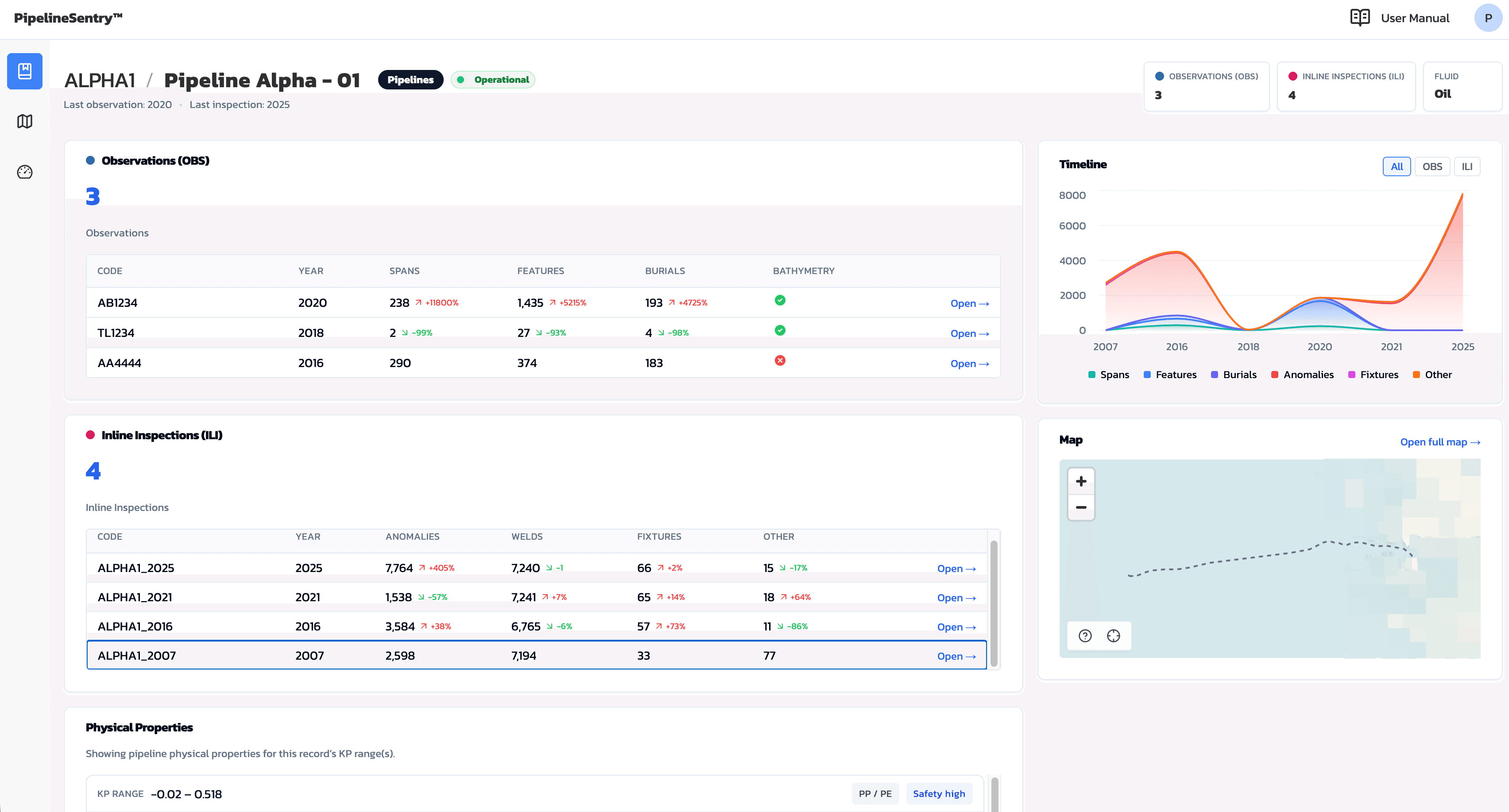
This update focuses on the foundation of PipelineSentry: making pipeline information easier to find, trust and use.
Pipeline integrity work often starts with a basic but difficult question: where is the right information? Design records, inspection outputs, survey files, anomaly lists, photographs, videos and engineering notes can all sit in different systems or folder structures. Before an engineer can assess a finding or plan an inspection, they may first need to reconstruct the history of the asset from scattered material.
PipelineSentry's centralised data directory is being developed to reduce that friction. The directory gives users a structured place to browse asset records and supporting evidence, with information organised around the pipeline rather than around the source file location.
From file storage to asset context
The intent is not to create another shared drive inside the product. A directory becomes useful when it helps users understand what a record is, where it belongs and why it matters. A survey report, an inspection export or a close-out file should be connected to the asset context it supports.
That context is especially important when teams are dealing with long-lived assets. Pipelines accumulate years of inspection campaigns, vendor deliverables and engineering decisions. If those records are not organised around the asset lifecycle, teams can lose confidence in what has already been reviewed and what still requires attention.
What users should be able to understand
The directory is being shaped around practical review questions. Users should be able to see which records are available for an asset, which inspection campaign they relate to, what supporting evidence exists and how that evidence connects to later integrity work.
This is the difference between simply storing files and building a usable integrity record. The same record might support a map view, an anomaly review, a remediation decision or a future audit. Keeping that record accessible and connected makes the rest of the workflow more reliable.
Why this matters for PipelineSentry
Many of the more visible parts of PipelineSentry depend on this foundation. Map-based context needs reliable source records. Integrity workflows need linked evidence. 3D visualisation is more useful when it can be tied back to the data behind the model.
The directory is therefore more than a navigation feature. It is the start of a connected product model where records, locations, findings and decisions can stay linked as work moves between views.
Development direction
The current development focus is on making the directory clear enough for day-to-day use while leaving room for richer connections later. That means keeping the browsing experience straightforward, making record context visible and ensuring the content structure can support future workflows.
As PipelineSentry develops, this directory will act as one of the main entry points into the platform. It gives users a familiar place to begin, while quietly supporting the more advanced review, mapping and visualisation features that sit around it.